Carbon Tax Explained
📅 2026 Update: Changes in Carbon Tax and Environmental Regulations
Since the original article was written, there have been notable updates in U.S. environmental regulations. These changes aim to address pollution, particularly from fossil fuels, and enhance public health protections. The earlier article continues further down the page for more context.
🌍 Stronger Standards for Vehicles
In March 2024, the EPA announced new rules to limit harmful air pollutants from light-duty and medium-duty vehicles. These standards will take effect with the 2027 model year. This change is part of a broader effort to reduce emissions and improve air quality.
🚚 Heavy-Duty Vehicle Regulations
On the same day, the EPA finalized the "Greenhouse Gas Emissions Standards for Heavy-Duty Vehicles – Phase 3." This rule sets tougher limits on greenhouse gas emissions for heavy-duty vehicles starting in model year 2027. These actions align with ongoing efforts to combat climate change and promote cleaner transportation.
⛽ Methane Emissions Charges
Under the Inflation Reduction Act, the EPA introduced a methane emissions charge. Starting in 2024, oil and gas producers will face a charge of $900 per metric ton of methane emitted above set thresholds. This charge will increase to $1,200 in 2026.
It's part of a strategy to reduce harmful emissions from the oil and gas sector.
📅 Extended Compliance Deadlines
In November 2025, the EPA extended deadlines for certain methane and air pollution compliance requirements in oil and natural gas operations. This includes a 180-day extension for monitoring and performance tests. Such delays aim to support industry transition while maintaining regulatory oversight.
📌 Key Updates Summary
- 🌱 New pollution standards for vehicles starting in 2027.
- 🚛 Tougher regulations for heavy-duty vehicles to cut greenhouse gas emissions.
- ⛽ Introduction of a methane emissions charge for oil and gas producers.
- 📅 Extended compliance deadlines for certain industry operations.
- 🔍 Ongoing EPA efforts to enhance public health protections.
💡 Tips for Understanding Carbon Tax Regulations
Reviewing your specific situation with an attorney is essential. They can provide insights tailored to your needs.
📊 Understand Your Emissions
Familiarize yourself with the emissions standards that apply to your operations. This includes knowing if you exceed the thresholds for methane emissions that could trigger charges.
📅 Stay Updated on Deadlines
Keep track of compliance deadlines set by the EPA. Missing a deadline can lead to penalties or unexpected costs. Regularly check for updates on regulations that may impact your business.
📞 Utilize EPA Resources
The EPA offers a range of guidance documents and compliance assistance programs. These tools can help you understand regulations and how to comply effectively.
🌍 Monitor Changes in Regulations
Stay informed about new rules and amendments that may affect your operations. The landscape of environmental regulations is constantly evolving, and being proactive is key.
📈 Evaluate Your Practices
Consider assessing your current practices for pollution reduction. Implementing cost-effective changes can help minimize emissions and ensure compliance with new regulations.
🏆 Free Options Ranked by User Reviews (2026)
No paid national services have met the review threshold for this area. Instead, this section lists free government and nonprofit resources available to help navigate carbon tax and environmental regulations.
🥇 1. EPA Compliance Assistance Programs
The EPA offers compliance assistance programs aimed at helping regulated entities understand and meet environmental regulations. These programs provide information on compliance requirements and best practices for reducing emissions.
🥈 2. EPA Guidance Documents
The EPA publishes various guidance documents that outline procedures and standards for compliance. These documents are useful for businesses seeking to navigate complex regulations and ensure they are meeting all necessary requirements.
🥉 3. EPA Technical Support
The EPA provides technical support to help entities comply with environmental regulations. This includes resources for monitoring emissions and understanding the implications of new rules.
4️⃣ Compliance Reporting Resources
The EPA requires annual emissions reports from facilities subject to its regulations. They offer specific forms and procedures to guide entities in accurately reporting their emissions and compliance status.
🔎 What to Check Before Paying for Help
- 🔍 Confirm the provider's credentials.
- 📅 Verify their understanding of current regulations.
- 💬 Check reviews from other users.
- 🛑 Be wary of high upfront fees.
- 📞 Ensure they offer ongoing support.
❓ Frequently Asked Questions
🌱 What is the purpose of the methane emissions charge?
The methane emissions charge aims to reduce emissions from oil and gas producers. It applies to emissions exceeding set thresholds, starting at $900 per metric ton in 2024.
🚛 How do the new vehicle standards affect manufacturers?
The new vehicle standards will require manufacturers to produce light-duty and medium-duty vehicles that meet stricter emissions limits starting in 2027. This change is designed to improve air quality.
📅 What are the compliance deadlines for the new regulations?
The compliance deadlines vary depending on the specific regulation. For example, the methane emissions charge begins in 2024, and certain monitoring requirements have extended deadlines.
📞 How can businesses get help with compliance?
Businesses can access EPA’s compliance assistance programs, guidance documents, and technical support. These resources are designed to help entities understand and meet environmental regulations.
🌍 What is the significance of the Clean Air Act?
The Clean Air Act is the primary federal law governing air quality. It requires the EPA to set standards for pollutants that may harm public health or welfare.
⚖️ Are there penalties for non-compliance?
Yes, failing to comply with EPA regulations can lead to penalties. These may include fines and additional requirements to rectify compliance issues.
⚖️ Recent Cases Related to Environmental Regulations
Recent court rulings have impacted how various environmental regulations are enforced and interpreted. These cases often relate to compliance with the Clean Air Act and other federal laws.
- Court Rules Against Kaiser Consulting in Wildlife CaseDistrict Court of Appeal of Florida · June 10, 2026
- Florida court dismisses appeal from wildlife conservation caseDistrict Court of Appeal of Florida · April 16, 2020
- Florida court dismisses case against wildlife commissionDistrict Court of Appeal of Florida · December 27, 2021
- Court reverses dismissal of case against Aguon for wildlife violationSupreme Court of The Commonwealth of The Northern Mariana Islands · August 30, 1997
Readers can explore more recent rulings by visiting the news section for the latest updates.
End of October 2026 Update
What is a Carbon Tax?
A carbon tax is a special form of environmental taxation that is predominantly levied based on the carbon content of particular fuels. In essence, the Carbon Tax is a sin tax and a distinct form of carbon pricing. The tax is levied to reduce the amount of greenhouse gases and to mitigate the diminishing effects that such gases place on the Ozone layer.
Carbon atoms are found in every fossil fuel, such as petroleum, coal and natural gas); these atoms are released as carbon dioxide when burnt. When increasing carbon dioxide is released into the atmosphere, the negative externalities and environmental effects are debilitating. In contrast, non-combustion energy forms, such as wind, sunlight, nuclear and hydropower, do not convert hydrocarbons into carbon dioxide.
Numerous studies and science academies, as well as the Assessment Reports distributed by the Intergovernmental Panel on Climate Change, have stated provided exhaustive research pointing to the potential impacts of carbon products and human-induced climate alterations. The carbon tax is therefore a fundamental policy measure that is used to help reduce the amount of greenhouse gases sparked through the emissions from fossil fuels. To reduce this impact, known as the carbon footprint, a number of countries have implemented carbon taxes or energy taxes related to carbon emissions.
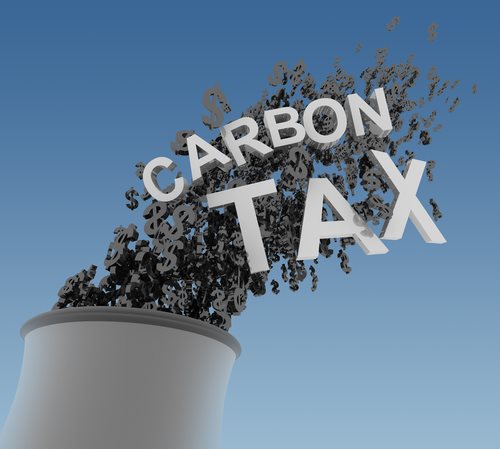
The carbon tax is levied and implemented differently based on government policy. In general, the carbon tax can be placed on users or producers of carbon-based fuels by the taxing only the burning of such fuels—products such as coal, gasoline, aviation fuel, natural gas or petroleum—in proportion to the fuel’s carbon content. Carbon taxes all offer a potentially cost-effective means of reducing greenhouse gas emissions.
From an economic standpoint, carbon taxes are a form of Pigovian tax—they help address the problem revolving around greenhouse emissions, however, they do not face the full social costs of the action. In addition, carbon tax is a regressive taxation model, in that it will disproportionately affect those individuals in the lower income brackets. This regressive nature, however, can be offset by using tax revenues to favor those low-income groups.
Specifics of the Carbon Tax:
Carbon Dioxide is a heat-trapping greenhouse gas; in the scientific community, the general consensus is that all human-induced greenhouse gas emissions are the primary cause for the augmentation of global warming and that carbon dioxide, of all the greenhouse gases, is the most responsible for destroying the atmosphere.
Throughout the world, over 27 billion tons of carbon dioxide is produced per year by general human activity. The physical effect of this massive use of carbon dioxide can measured or observed as a change in the planet’s atmosphere system’s energy balance—more specifically the radiative forcing of carbon dioxide.
The carbon tax utilizes an indirect taxation model; as oppose to a direct tax which places a levy on income, the carbon tax is placed on transactions and use. As stated before, the carbon tax will differ based on the regulating government agency.
In the United Kingdom, for instance, the carbon tax is levied through the introduction of the fuel duty escalator, which is a specific environmental tax on retail petroleum products. This act aimed at reducing the carbon dioxide emissions in the transport sector. The United States, by contrast, has implemented a broad carbon tax that is interpreted and subsequently implemented on a local level.